Dace Road is an ongoing residential project located in Fish Island, Hackney Wick where I was commissioned to produce 9 paintings, and 5 signs, for Bridle House. The central theme of the series of paintings is change and they aim to celebrate the area’s history to help residents feel more connected to their surroundings by being accessible and engaging for viewers who may not be familiar with the local history.
Bridle House references the site’s early use as a stable yard where horses were kept and tacked, serving London’s growing barge industry during the industrial revolution. During this time, Fish Island rapidly developed into one of London's most densely concentrated industrial zones, thanks to its proximity to the river and railway.
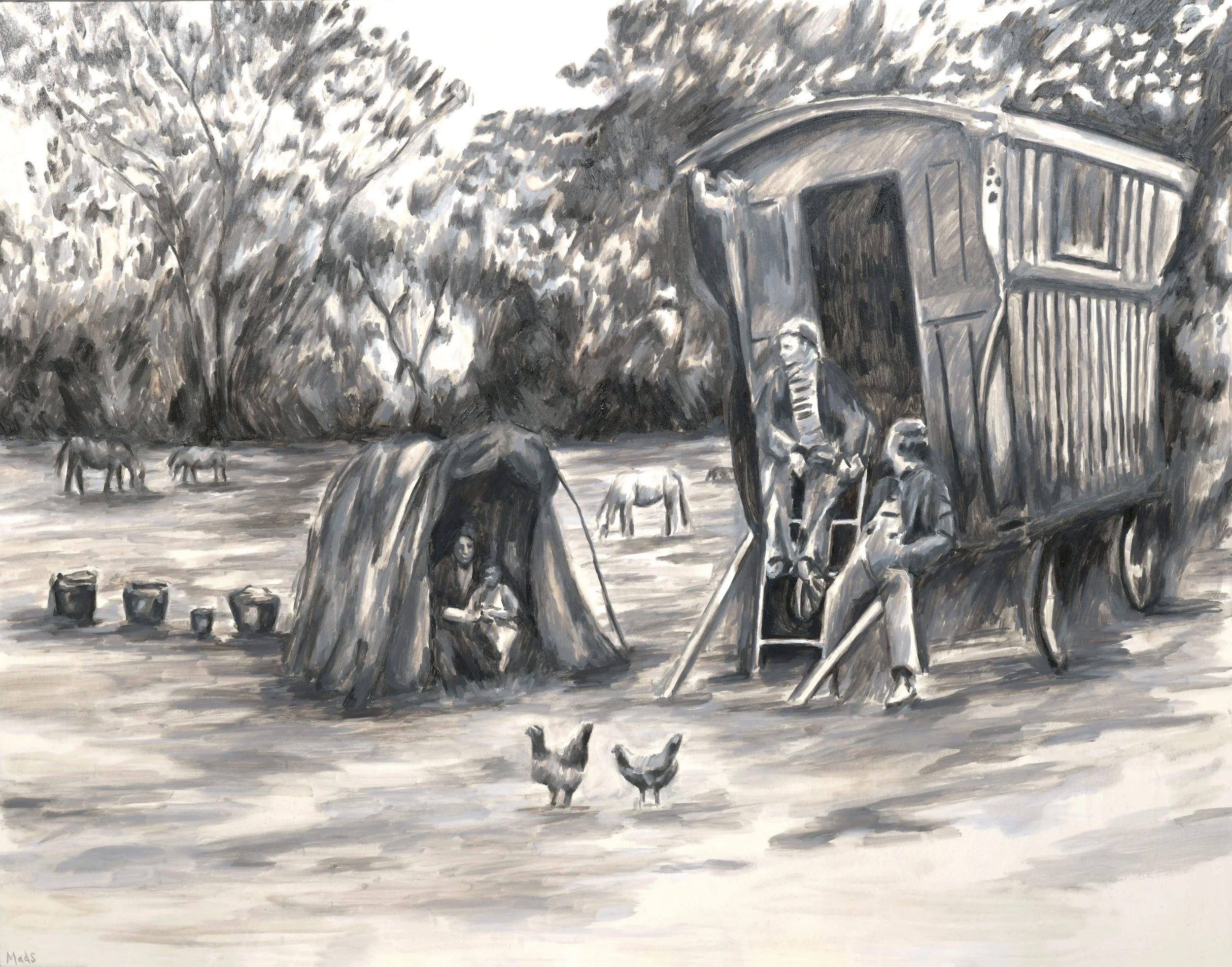
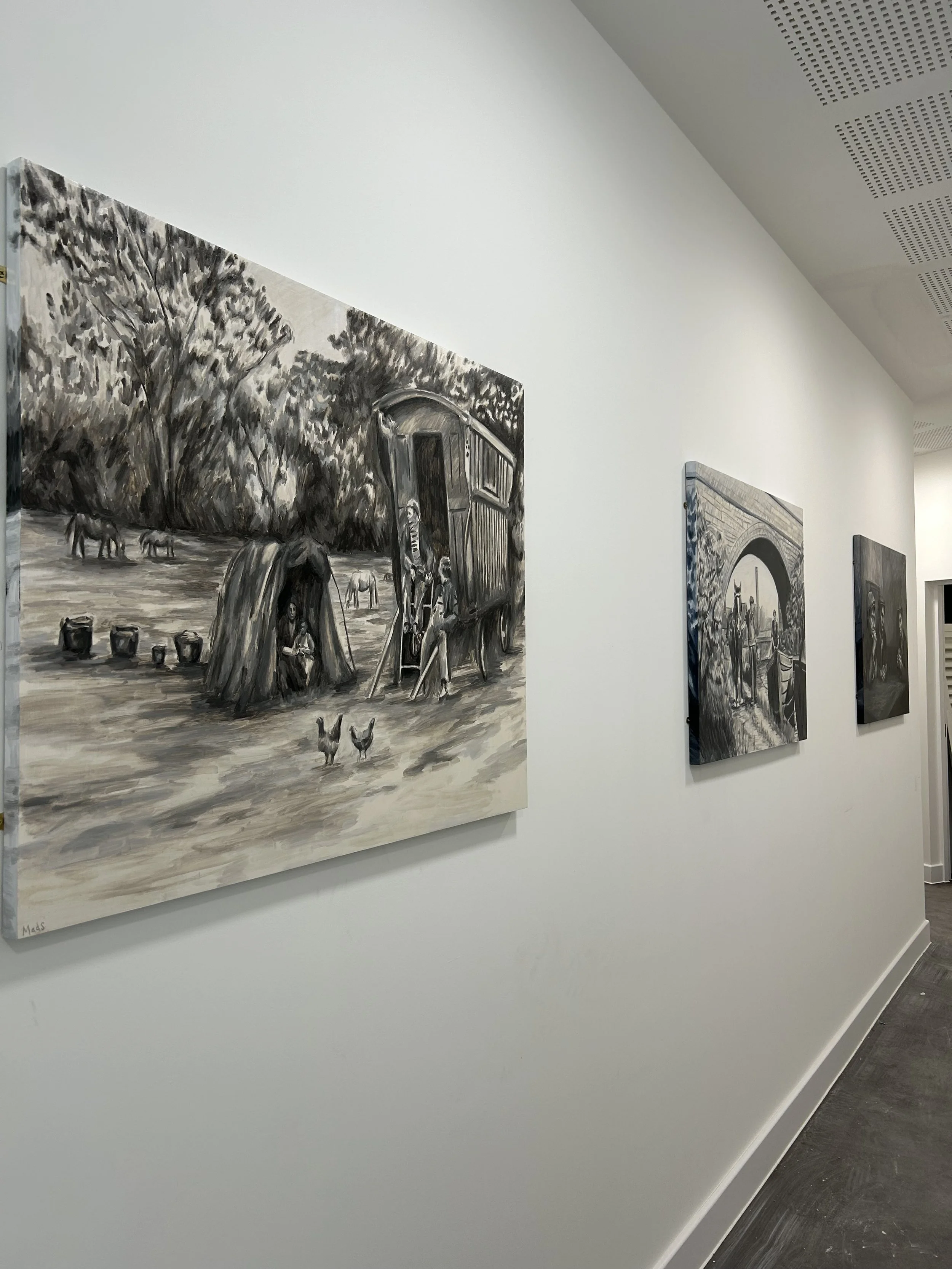
Painting No.1 - Hackney Marshes
During World War II, Hackney Wick suffered extensive bomb damage, and in the decades that followed the area experienced a decline in industrial activity, with many of the damaged structures either demolished or repurposed. From the 1990s onward, artists and creative collectives began moving into disused spaces, reshaping the area into a creative hub.
The 2012 Olympics brought another phase of change with the transformation of nearby Stratford and the Queen Elizabeth Olympic Park. Because of this, Fish Island entered a new phase of major redevelopment which led to new apartment buildings, co-working spaces, and entertainment venues.
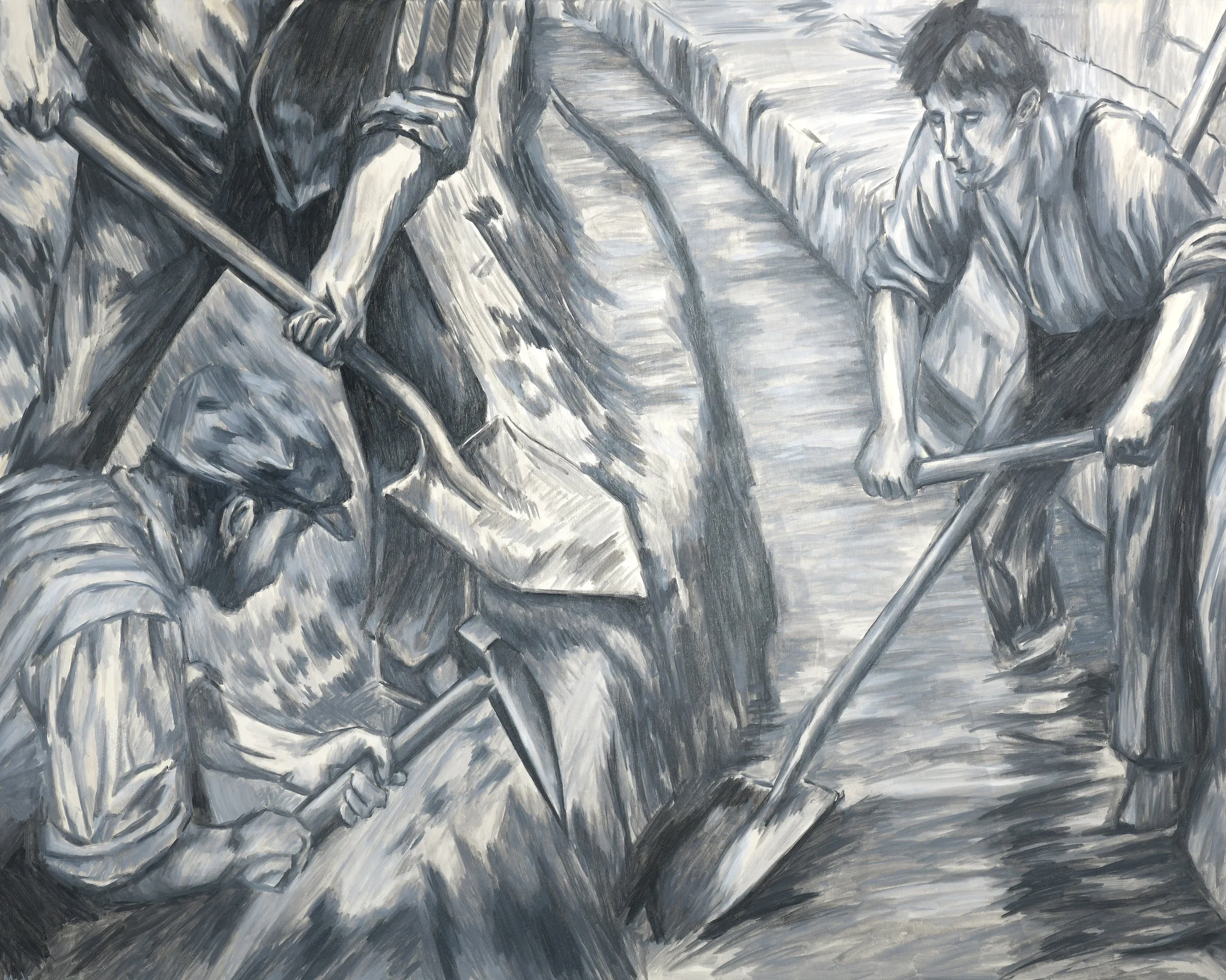
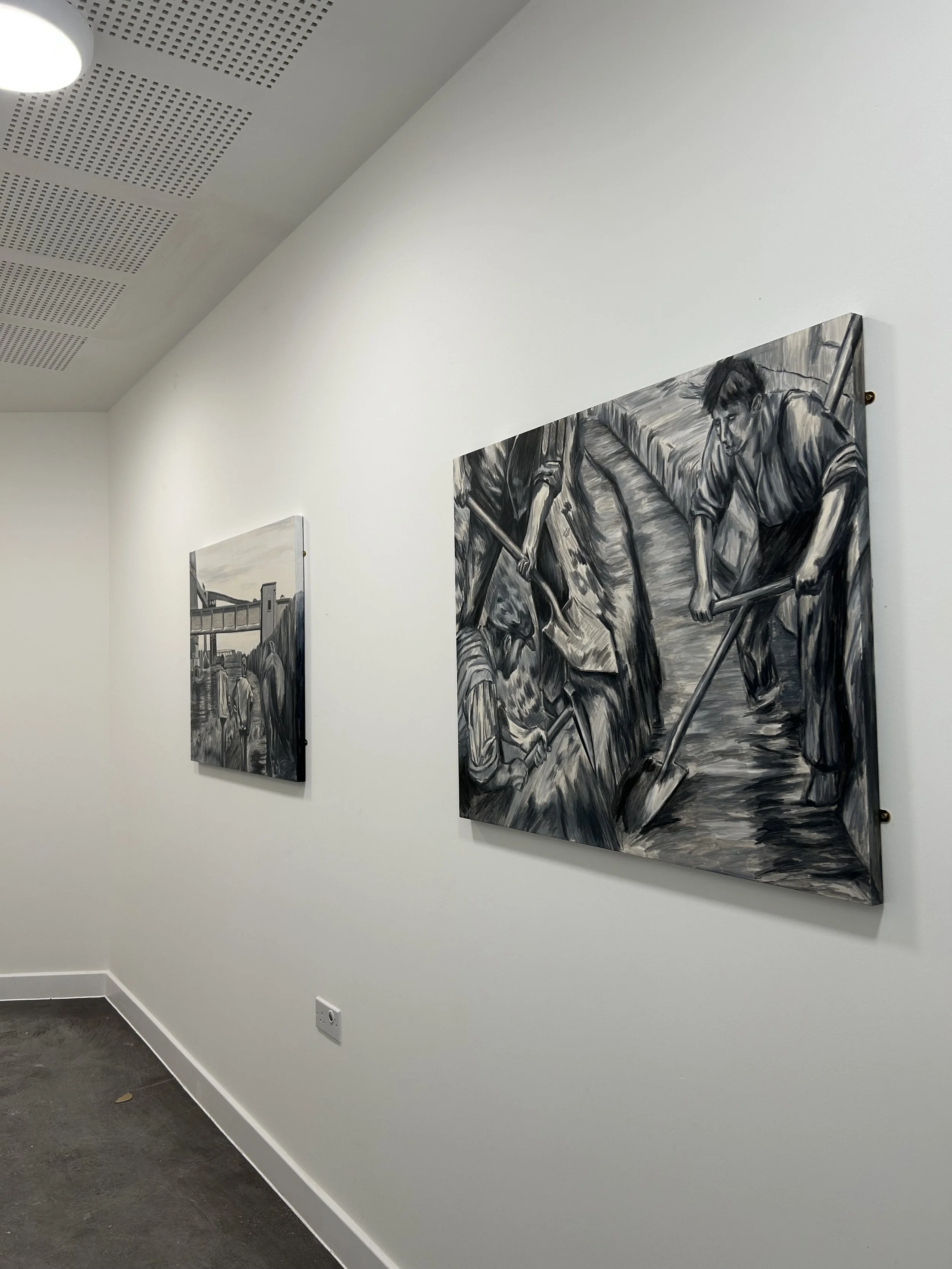
Painting No.2 - Canal Construction
The site of Bridle House reflects this same evolution. Originally a three-storey stable block built between 1906 and 1912, it later became a twine factory, furniture workshop, and finally an events space, echoing the broader shifts of Hackney Wick from industry to creativity and leisure.
The paintings tell this story chronologically; the first piece shows early settlements on the Hackney marshes. The horses, which would later become central to industrial labour, are displayed here as a tool for survival.
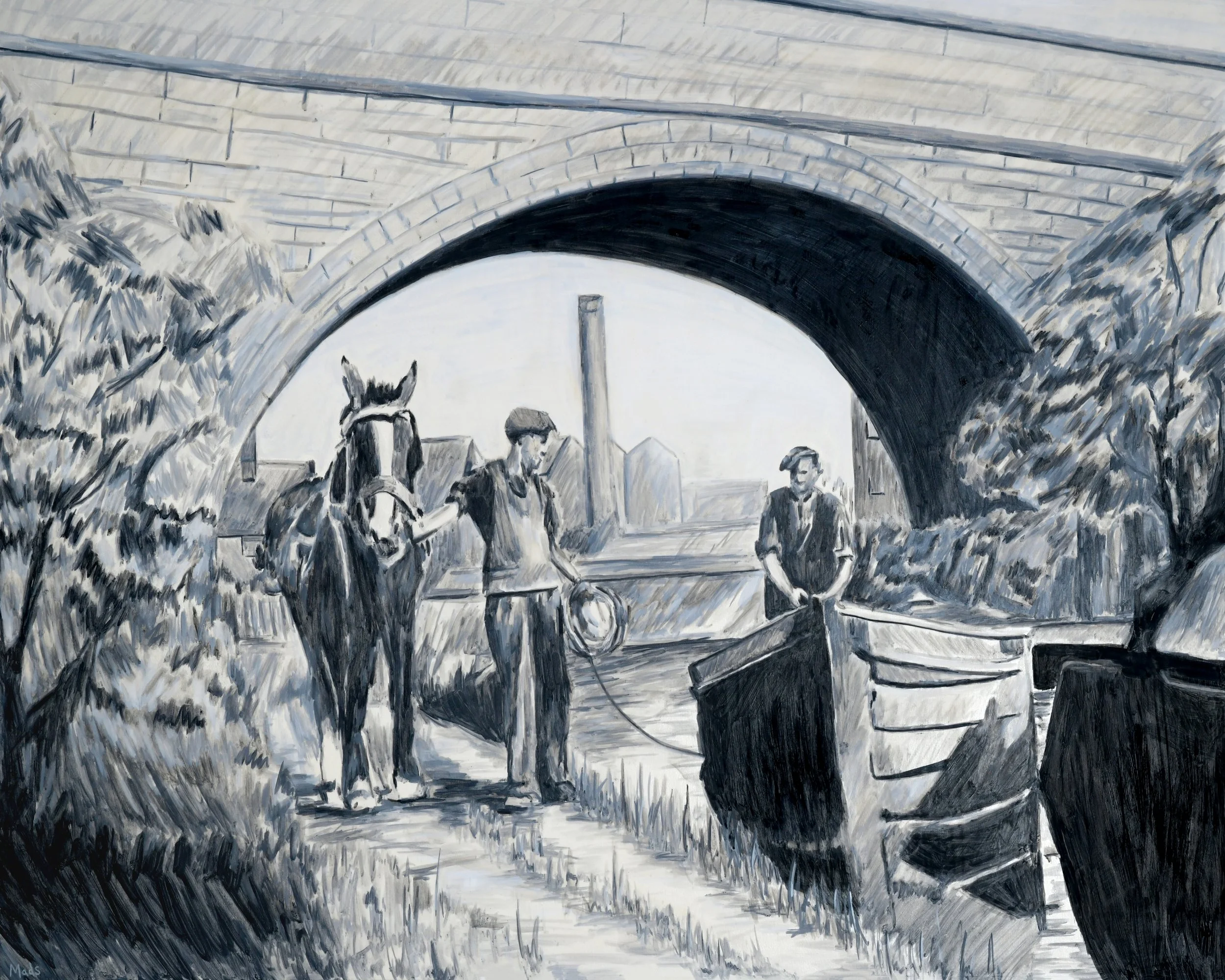
Painting No.3 - Hostler and Horse Walking Along The Canal
The next painting is the building of the canal, highlighting the hard labour of the Navvies who constructed the Lee Navigation and marks the beginning of the area’s transformation into industrial purpose.
The third painting shows a Hostler on the canals edge leading a horse as the area starts to change with the construction of the canals, which is closely followed by the fourth painting where once again there is a Hostler leading a horse, but now most of the greenery is gone showing the shift from natural land to a built environment to serve the growing economy.
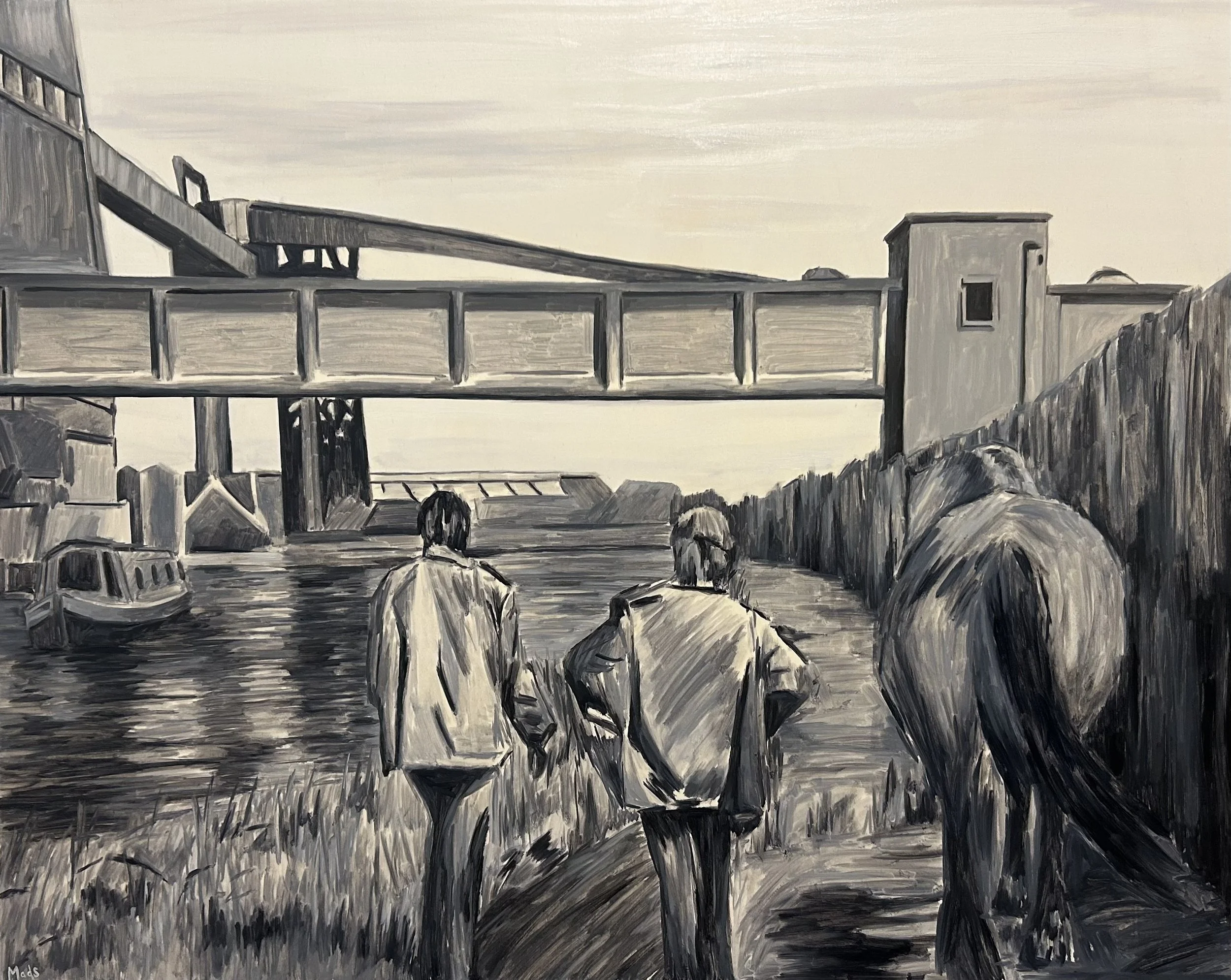
Painting No.4 - Hostlers Walking Away
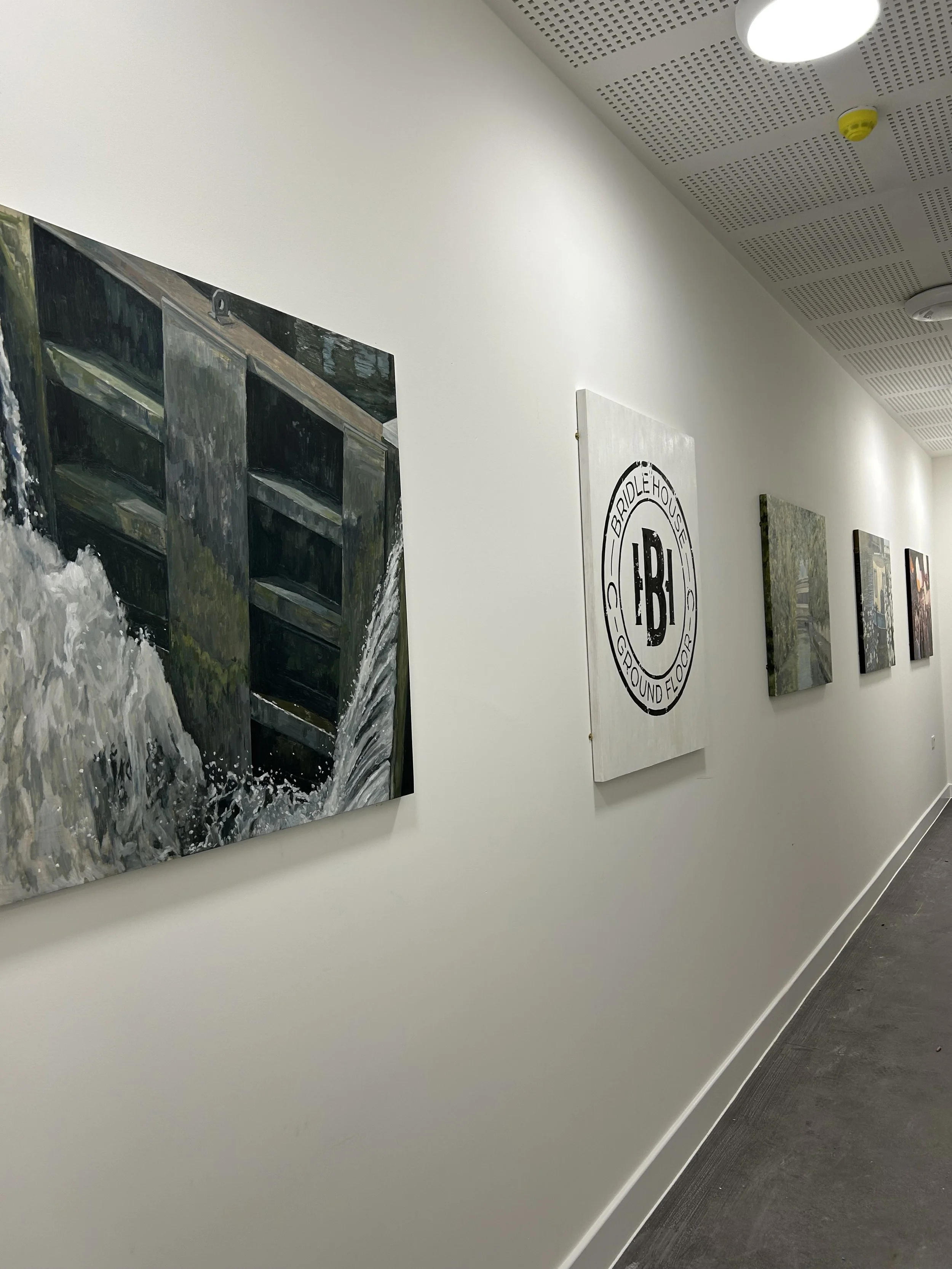
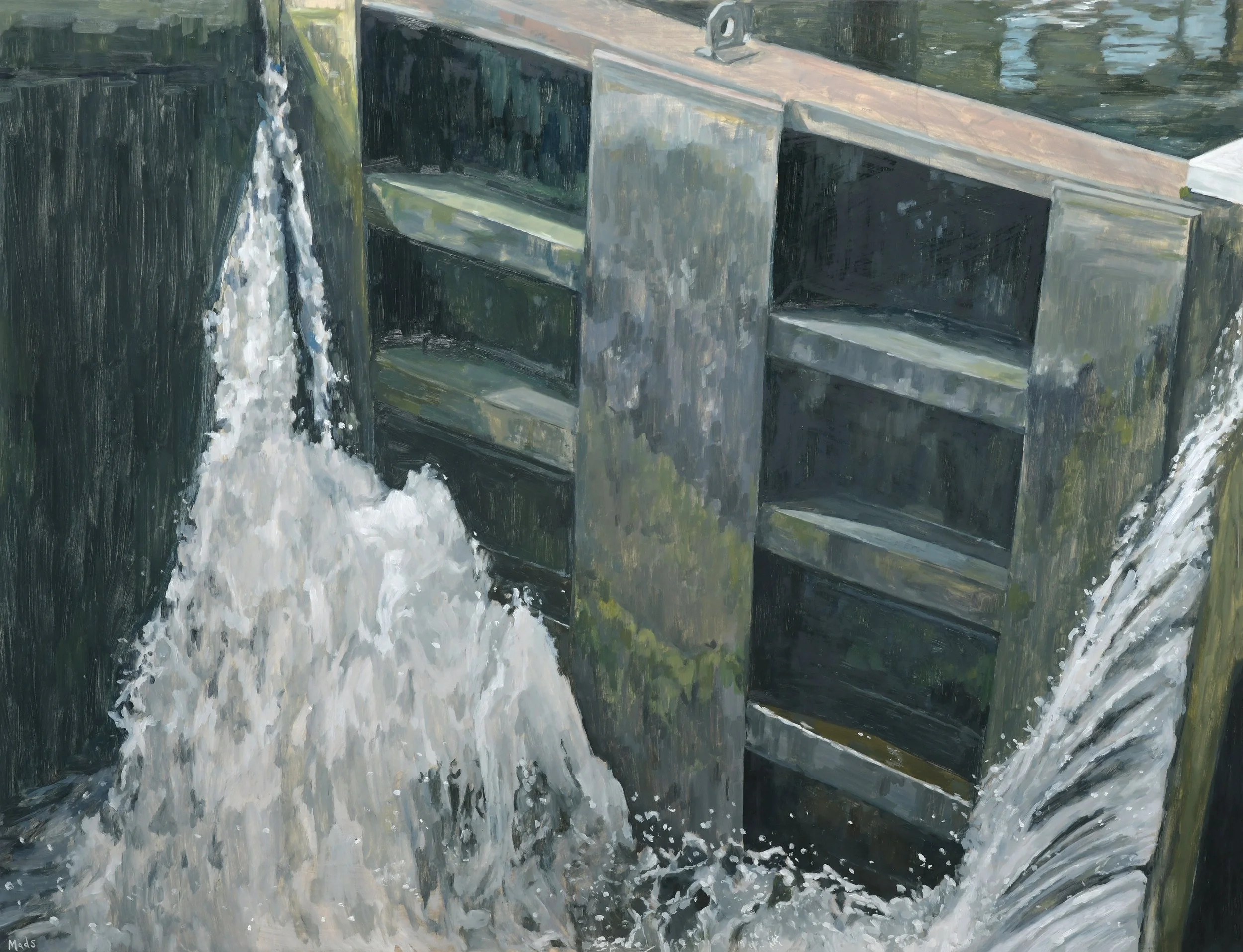
Next, I chose to focus solely on the Hostlers, unwinding after work, to depict how the area began to evolve socially. Following this is Old Ford Lock, a catalyst for industrial development, shaping the neighbourhood by facilitating trade via the canal system.
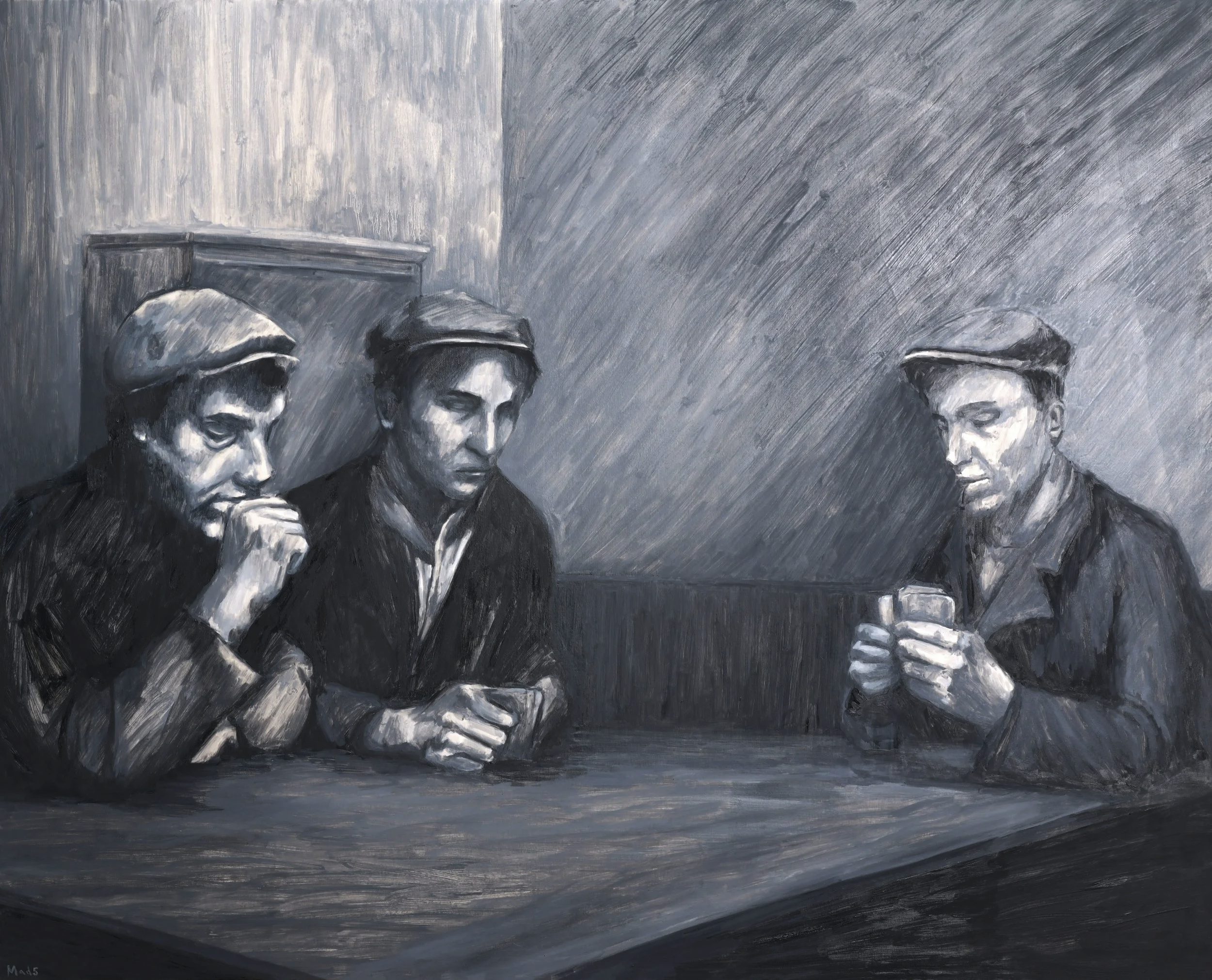
Painting No.5 - Hostlers Unwinding
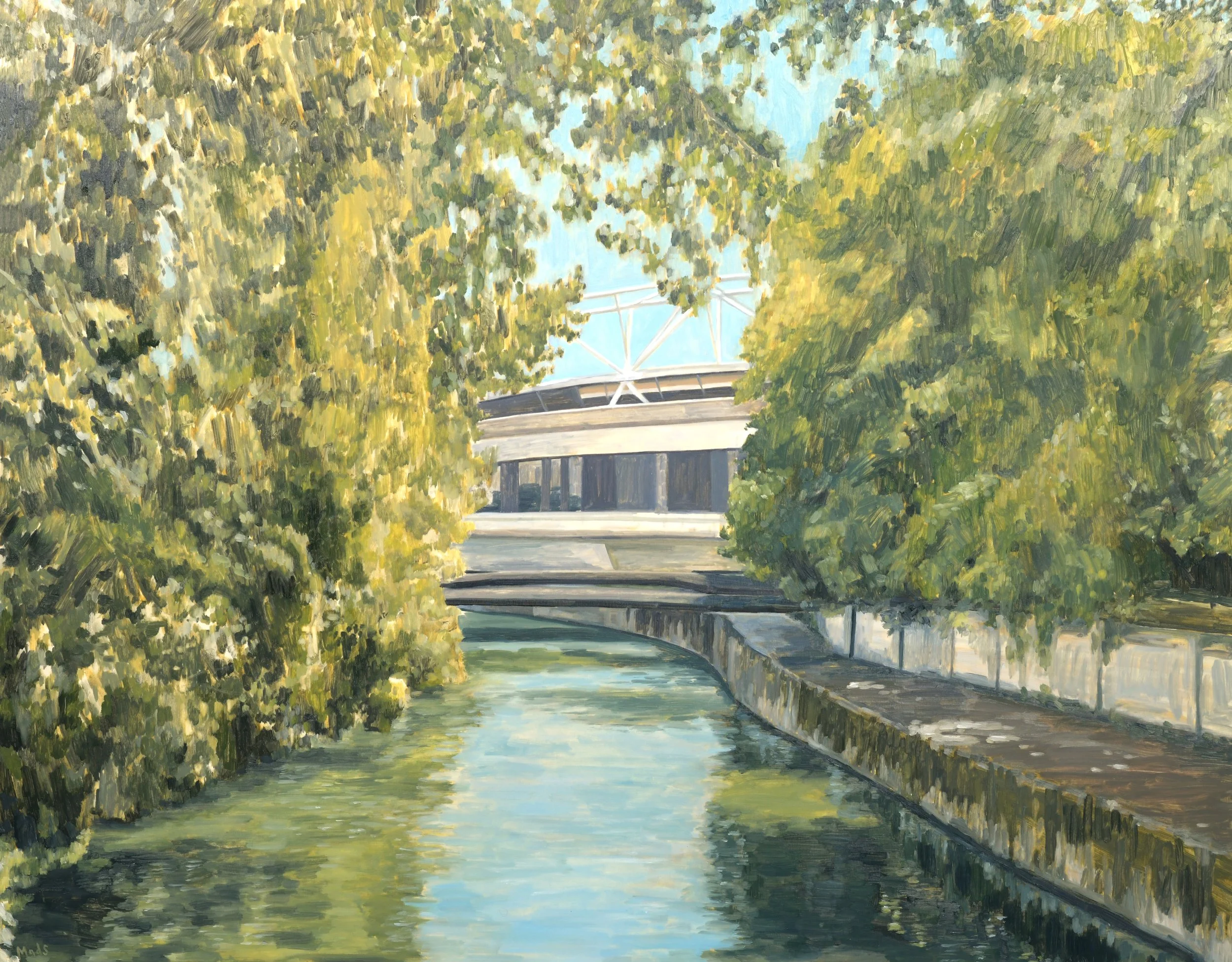
Following this is the view of the Olympic Park from the canal. This painting depicts the dramatic shift from labour to leisure. The once-industrial site is now once again a relatively green, recreational space, anchored by the Olympic Park. Tree-lined canals and moored houseboats give the impression of a peaceful retreat, at odds with the surrounding city.
Painting No.6 - Old Ford Lock
Painting No.7 - Olympic Stadium
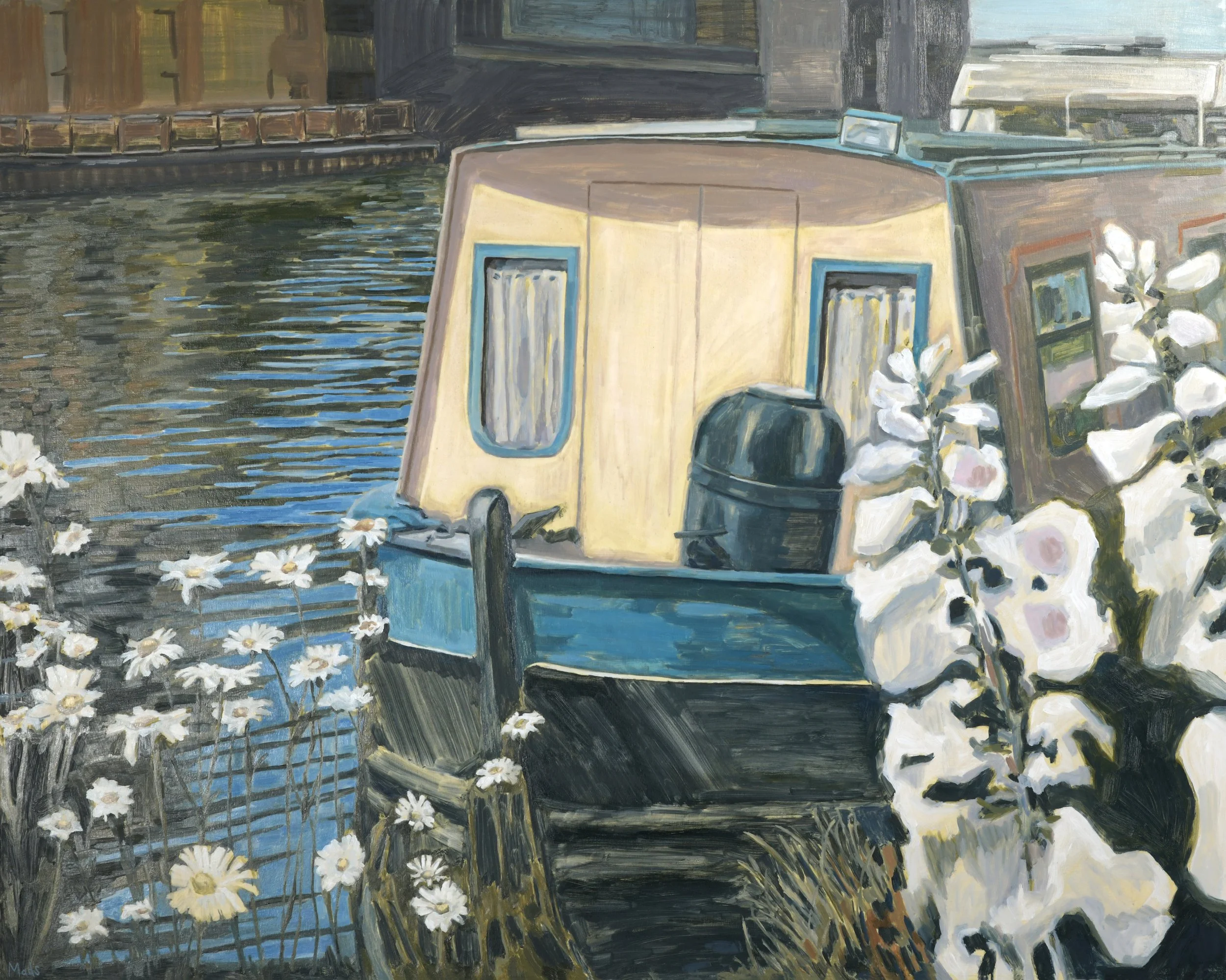
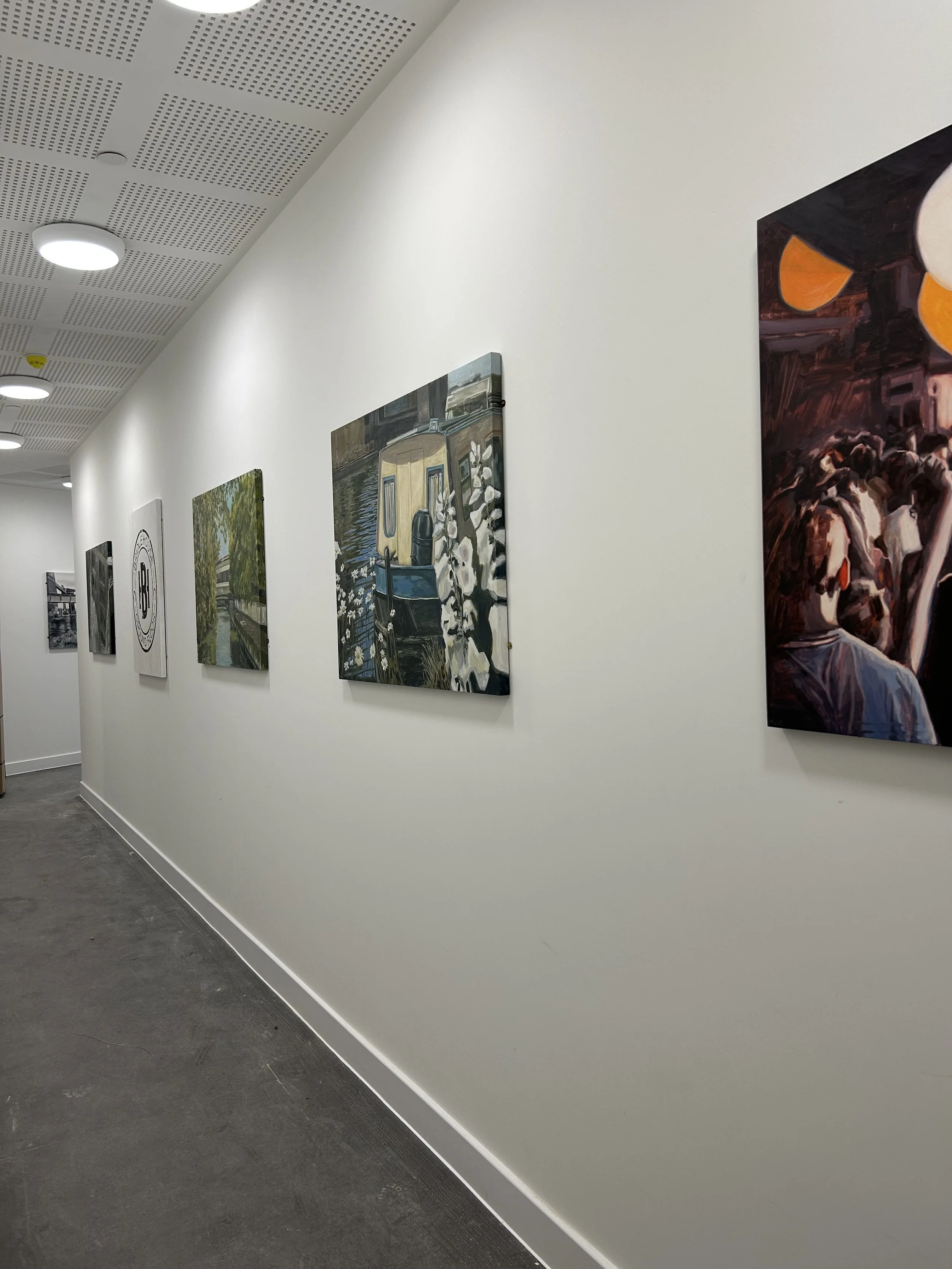
The canal boat painting is next, where the canal is shown to be a home with more greenery, further bringing the narrative full circle from industry back to nature.
Painting No.8 - Living on The Canal
The final painting showcases the site's final use as an events space before its residential development and represents the most radical social shift. Fish Island has evolved from an industrial hub into a destination for leisure and entertainment. In 2025, people don’t come here to work and leave exhausted, they come to socialise, relax, and enjoy the nightlife. The painting captures this cultural transformation, spotlighting the area’s vibrant social identity and contemporary atmosphere.
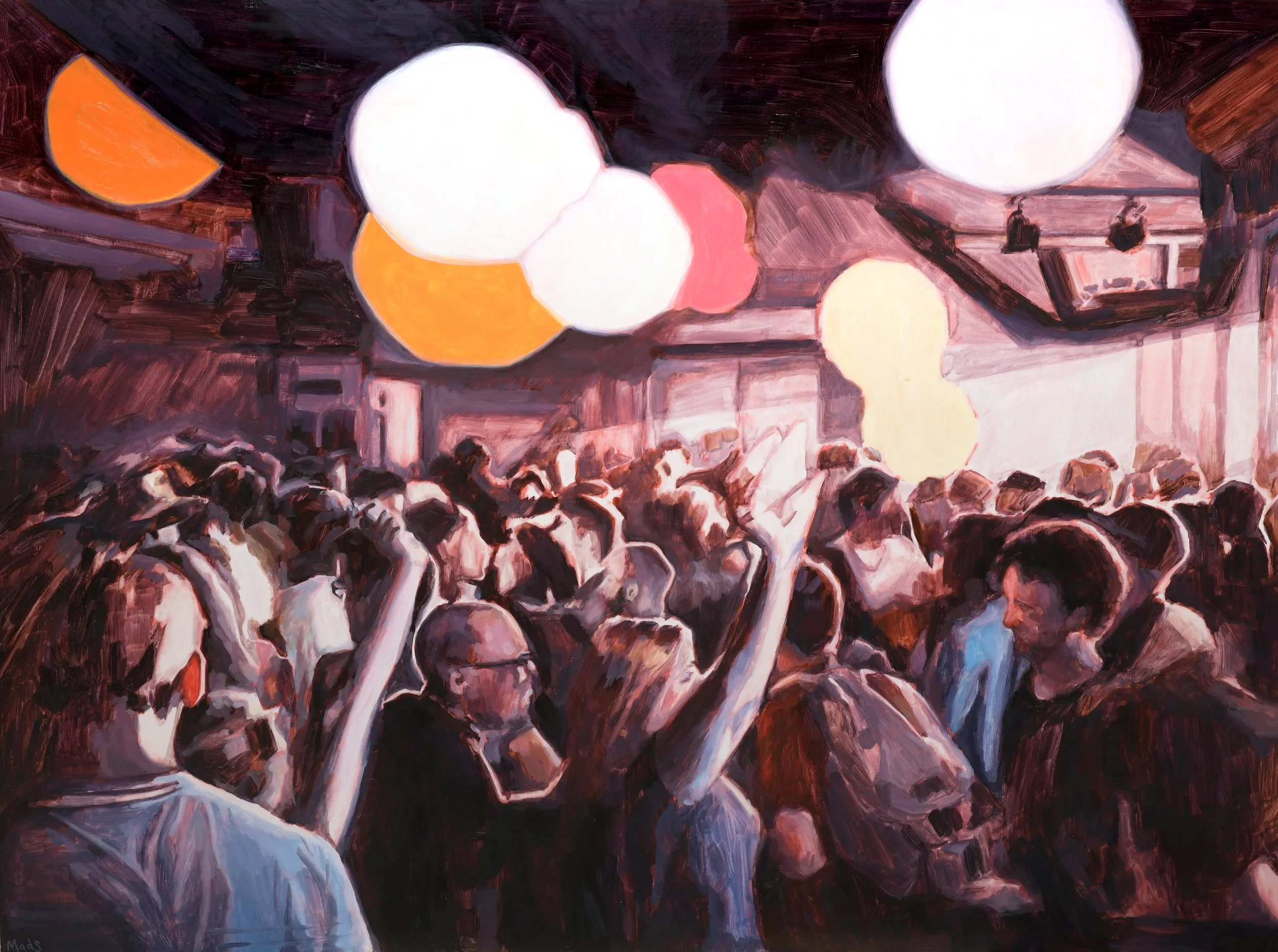
Painting No.9 - Nightlife at Dace Road